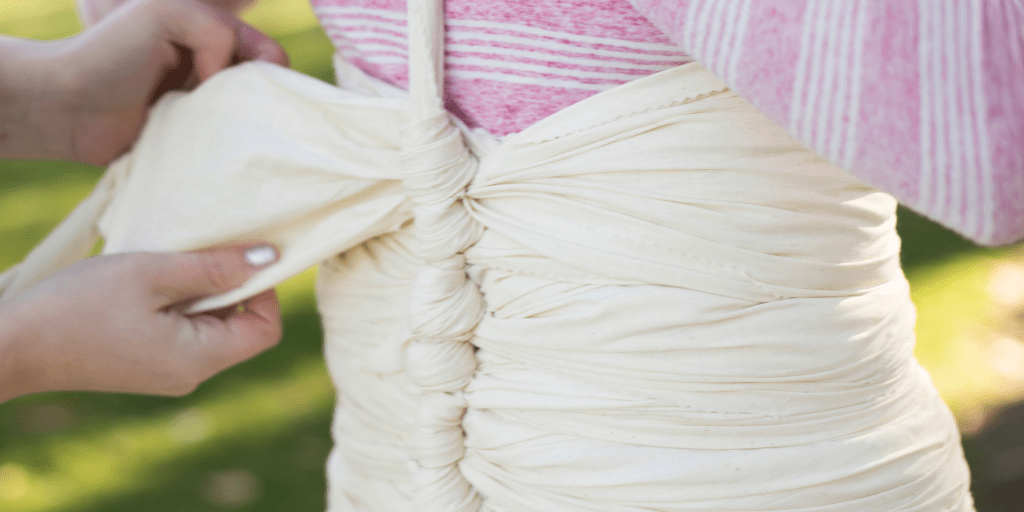
Belly binding: the ancient tradition of binding the postpartum person in cloth, typically muslin cotton, to help close the bones from birth and support the internal body as things return to their pre-pregnancy positions.
This tradition has made its way here, to the US, and is often thought of as a way to rid birthers of their postpartum bodies. To “snap back into shape” again. While this does happen, and your body looks slimmer, it isn’t the purpose of belly binding. Unlike store-bought girdles that push everything inward and downward, and focusing on “slimming the body,” binding is about healing and adapting to this new process of parenthood.
When you’re pregnant your body is releasing a hormone, called Relaxin. This hormone makes your joints looser, your ligaments stretchier, your organs more able to shift up and out of the belly and into the chest cavity. It enables your pelvis to stretch and open wider for the baby’s head and shoulders to fit through the birth canal. This also means your body is wider than it was before, and during postpartum, your organs now fall 40cm, into the womb space created by your baby. And this hormone still flows through your body for months postpartum, which means that returning to your pre-pregnancy state will also take months.

Belly binding (also known as closing of the bones) helps move the bones and encourages shortening of the ligaments again, and when done properly, supports your insides as they shift back to their original places. It also reminds you that you aren’t supposed to move around a lot or lift heavy things. You’re meant to be warm, to bond with your baby, to learn all about this new person in your life, and to heal. When you’re bound in this cloth from hip to sternum, wrapped in an upward motion, with no large gaps, and often coupled with a warming paste or essential oils, it keeps your spine straight and aligned, which helps alleviate back pain and promotes good posture, it gives your organs support, to help prevent prolapse, your stomach muscles are held together, to help prevent diastasis recti, and, in turn, you look thinner faster, heal more quickly, bleed less and for a shorter period of time, and being bound provides physical and emotional comfort to your core, preventing the empty feeling you have from your body no longer housing your baby, the placenta, and all the fluids surrounding your baby.
The closing of the bones process isn’t about not looking like you’ve just had a baby, but instead it’s about supporting you during the process of finding your way through this new role as a parent to this new human.
 DoulaWise